Guild Wars 3 reimagines Tyrian prequel with action-centric traversal
Guild Wars 3, from ArenaNet, is a narrative-focused MMORPG set during the Golden Age of Tyrian history where players join the Vaelwardens to defend Orr. The game combines open exploration with mission-driven progression and action-oriented encounters that emphasize player movement and tactical decision-making. Key hallmarks shown so far include interaction with Vael spirits, a focus on player bonds, and both solo and group options. It targets franchise fans and MMO players seeking story-led exploration.
It places player motivation inside a mythic frontier rather than a traditional quest hub
The setting sends you into ancient Orr as a protector of nature, which gives exploration a clear purpose: protect Vael spirits and stop factions that exploit magic. Story beats are framed around guild duty and landscape stewardship, so the player's urge to explore is tied to preservation and investigation. That focus shifts pacing toward detection and territory control instead of purely loot-driven advancement, shaping how missions present themselves.
Movement and attack systems change how fights and traversal interlock
The game ties speed and momentum to agency. Rather than slow, stop, and fight loops, momentum transfers between gliding, leaping, sprinting, and riding so positioning matters before and during combat. The action-combat engine supports mouse/keyboard and controller inputs and rewards timing and choice. Notable mechanical elements include:
- momentum-based traversal
- high-responsiveness action combat
- wall-running and free-form movement options
Solo play and cooperative bands coexist with player-focused progression
The design allows solo adventuring or forming bands of players, so progression can be experienced alone or in groups without forcing one path. Narrative threads center on guild activities and relationships with Vael spirits, which feed into mission structure and unlocks. The developer's stated philosophy emphasizes respecting players' time, which shows in mission pacing and options for shorter or longer play sessions.
Presentation leans into verdant, high-fidelity environments and cinematic cues
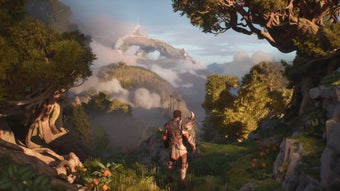
The visual direction prioritizes lush wilderness over urban grit, with Orr rendered as dense, magical terrain that supports exploration. Audio design highlights environmental life and spirit presence, creating cues for investigation and ambush. Compared with the previous franchise entry, the game shifts focus from city-to-city navigation toward open-region discovery, which alters how players perceive risk and reward across the map.
In summary, the game suits players who value exploration, story, and deliberate action
The game is a strong fit for players who enjoy narrative-driven world discovery paired with responsive combat and choice-driven encounters. Expect a development timeline to influence availability, since public play begins with a beta scheduled for fall 2027; patience is a practical consideration for those seeking immediate access. For players willing to wait, the title offers a focused prequel experience that emphasizes place and consequence.

.png)